
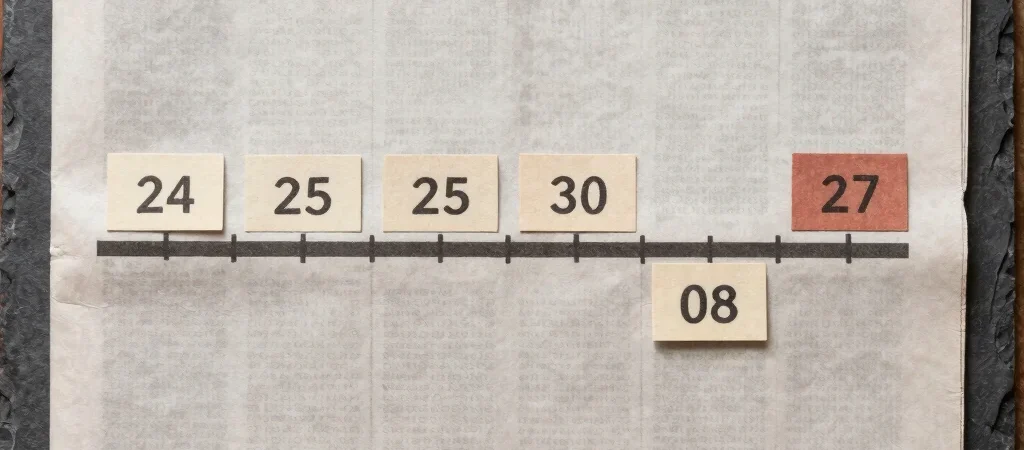
In a developing case, an early timeline can look precise while resting on only a few confirmed points. An initial agency statement, a later court filing, and subsequent reporting may add details or clarify when events occurred. A responsible update shows what changed instead of quietly smoothing the record into a story that always seemed certain.
Separate events from reports
A timeline should distinguish the time an event is said to have happened from the time it was reported or confirmed publicly. Those are different moments. If a source gives only an approximate window, the timeline should preserve that uncertainty rather than manufacture an exact hour.
Treat gaps as gaps
A pause in public information does not establish what happened during that period. Records may not be released, accounts may conflict, or investigators may not have shared a detail. Marking a gap clearly is more informative than using speculation to connect two known points.
Make corrections easy to see
When new information changes the sequence, readers should be able to tell which detail was revised and why, when that reason is known. Dates and source attribution help keep later developments connected to the record. A useful timeline is not a claim of completeness; it is an account that can be updated without hiding what remains unclear.